
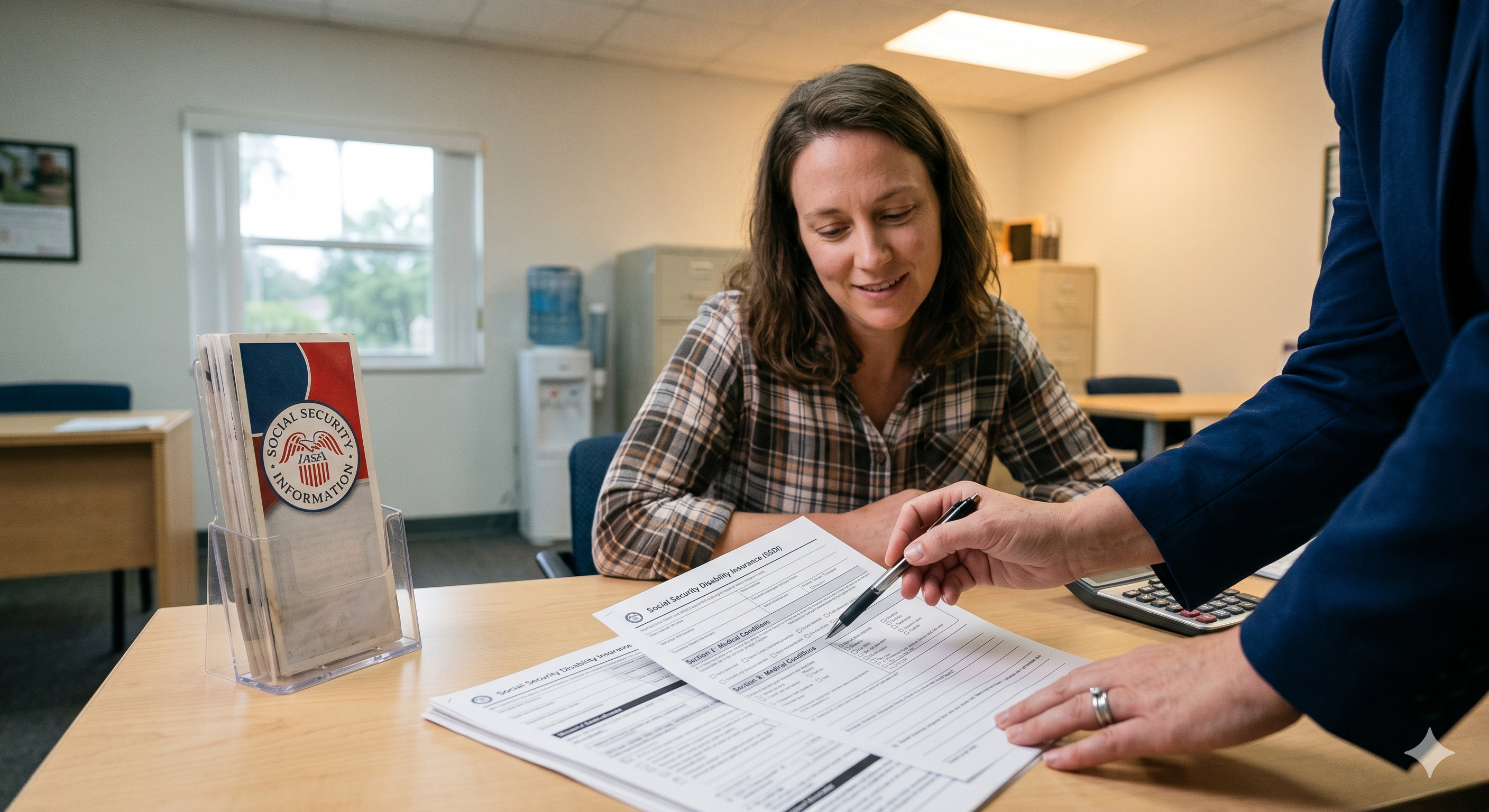

Two federal programs — SSI and SSDI — provide monthly cash payments to people with disabilities, but they work in fundamentally different ways. Confusing them is one of the most common mistakes people make when seeking disability benefits, and applying for the wrong one can waste months. Understanding which program applies to your situation — or whether you might qualify for both — is the essential first step.
SSI: Benefits Based on Financial Need
Supplemental Security Income is a needs-based program. It provides monthly payments to people who are disabled, blind, or aged 65 and older and who have very limited income and resources. Work history doesn't matter — you can qualify even if you've never held a job. What matters is your current financial situation.
For 2026, the federal SSI payment is $994 per month for an individual and $1,491 for a couple. Many states add a supplemental payment on top of the federal amount, so your actual benefit may be higher depending on where you live. To qualify, your countable resources must fall below $2,000 as an individual or $3,000 as a couple. Not everything counts as a resource — your primary home, one vehicle, household goods, and personal belongings are generally excluded. The limit primarily applies to bank accounts, cash, stocks, and additional property.
SSI payments are reduced by other income you receive. The first $20 of most income each month is excluded. For earned income, the first $65 plus half of remaining earnings is also excluded. This means you can work and earn some money without losing your entire SSI benefit.
In most states, SSI recipients automatically qualify for Medicaid, which provides immediate health coverage with little or no out-of-pocket cost.
SSDI: Benefits Based on Work History
Social Security Disability Insurance is an earned benefit — think of it as insurance you've paid into through payroll taxes throughout your working life. To qualify, you must have a qualifying disability and enough work credits. In 2026, you earn one work credit for each $1,890 in wages, up to four credits per year. Most adults need 40 credits (roughly 10 years of work), with at least 20 earned in the 10 years before the disability began.
Your SSDI payment is based on your lifetime earnings, not on financial need. Your assets and other income (apart from substantial work earnings) don't affect eligibility. As of early 2026, the average monthly SSDI benefit for disabled workers is approximately $1,634, though individual amounts vary widely based on earnings history.
SSDI recipients become eligible for Medicare — but only after a 24-month waiting period from when benefits begin. This gap is one of the program's biggest frustrations. During the waiting period, some people bridge the coverage gap with marketplace insurance, COBRA, or Medicaid (if they also qualify based on income).
Your family members may also receive benefits on your SSDI record: a spouse caring for your child under 16, unmarried children under 18, and adult children disabled before age 22. Total family benefits are capped at 150 to 180 percent of your individual benefit.
Same Disability Standard, Different Everything Else
Both programs use the same medical definition of disability: your condition must prevent you from engaging in substantial gainful activity and must be expected to last at least 12 months or result in death. In 2026, the SGA limit is $1,690 per month (or $2,830 if you're blind). The five-step evaluation process the Social Security Administration uses to determine disability is identical for both programs.
Beyond that, nearly everything differs. SSI is funded by general tax revenue — it's a safety-net program for people with very limited means. SSDI is funded by payroll taxes — it's an insurance program for workers who've paid in. SSI has strict income and asset limits. SSDI has no asset limit and no income limit apart from the SGA threshold. SSI connects you to Medicaid. SSDI connects you to Medicare (after a wait). SSI payments are a flat amount reduced by other income. SSDI payments are based on your earnings record.
Can You Get Both?
Yes. If your SSDI payment is low — typically because your earnings history was limited — you may also qualify for SSI to make up the difference. This is called receiving "concurrent" benefits. For example, if your SSDI payment is $500 per month and the SSI rate in your state is $994, SSI can supplement the gap. When you apply for one program, the SSA evaluates your eligibility for both.
How to Apply
You can apply for both SSI and SSDI through the Social Security Administration. For SSDI, you can apply online at ssa.gov, by phone at 1-800-772-1213, or in person at your local Social Security office. For SSI, you can start the process online, but you'll need to complete the application by phone or in person.
The initial determination typically takes three to six months. About 70 percent of initial applications are denied, but the denial rate drops substantially at the hearing level of appeal. If you're denied, don't give up — request an appeal within 60 days and consider working with a disability attorney or advocate. Most charge no upfront fee and are only paid if your claim is approved.
/sites-cdn/openfinancial.co/images/2026/05/04/Gemini_Generated_Image_fhea9gfhea9gfhea.png?width=256&height=256&fit=cover)
/sites-cdn/openfinancial.co/images/2026/05/04/Gemini_Generated_Image_21fcul21fcul21fc.png?width=256&height=256&fit=cover)
/sites-cdn/openfinancial.co/images/2026/05/04/Gemini_Generated_Image_q1hbg5q1hbg5q1hb.png?width=256&height=256&fit=cover)
/sites-cdn/openfinancial.co/images/2026/05/04/Gemini_Generated_Image_z00edhz00edhz00e.png?width=256&height=256&fit=cover)
/sites-cdn/openfinancial.co/images/2026/05/04/Gemini_Generated_Image_fhea9gfhea9gfhea.png?width=448&height=448&fit=cover)
/sites-cdn/openfinancial.co/images/2026/05/04/Gemini_Generated_Image_21fcul21fcul21fc.png?width=448&height=448&fit=cover)
/sites-cdn/openfinancial.co/images/2026/05/04/Gemini_Generated_Image_q1hbg5q1hbg5q1hb.png?width=448&height=448&fit=cover)
/sites-cdn/openfinancial.co/images/2026/05/04/Gemini_Generated_Image_z00edhz00edhz00e.png?width=448&height=448&fit=cover)
/sites-cdn/openfinancial.co/images/2026/04/30/apply_for_snap_benefits.png?width=448&height=448&fit=cover)
/sites-cdn/openfinancial.co/images/2026/05/02/Gemini_Generated_Image_w9gc9w9gc9w9gc9w.png?width=448&height=448&fit=cover)